
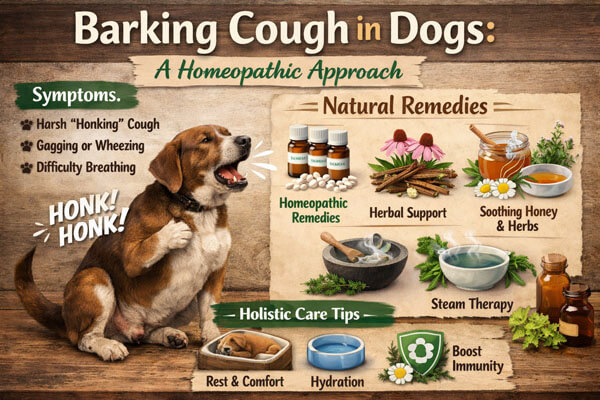
Barking cough in dogs can be alarming, especially when it sounds as though something is stuck in the dog’s throat. This type of cough can indicate a range of conditions, including kennel cough, allergies, throat irritation, or even an infection. It is essential to understand the possible underlying causes and treat the cough promptly, particularly when it leads to discomfort or restlessness in your pet. Homeopathy offers several remedies that can provide relief for dogs experiencing barking cough and throat irritation.
Common Causes of Barking Cough in Dogs
Barking coughs in dogs may stem from various conditions, including:
- Kennel Cough: A contagious respiratory disease, causing a dry, hacking cough.
- Throat Irritation: Exposure to allergens, pollutants, or foreign particles can cause throat irritation, leading to coughing.
- Allergies: Pollen, dust, or certain foods can trigger an allergic cough.
- Infections: Viral or bacterial infections may cause a persistent cough, often accompanied by other symptoms like lethargy and loss of appetite.
- Airway Blockage: Something stuck in the throat or upper airway can result in frequent coughing.
Understanding these causes can help determine the best course of treatment. Below are some of the most effective homeopathic remedies for barking cough and related throat irritation in dogs.
1. Spongia Tosta
- Symptoms and Uses: Spongia tosta is one of the top remedies for a dry, barking cough in dogs. This remedy is particularly useful when the cough sounds harsh and hollow, resembling a “sawing” sound, as if something is stuck in the throat. The dog may appear restless and tend to cough more during the night or when exposed to cold weather.
- Indications: Dry, barking, or hoarse cough, and throat irritation that worsens in cold air or at night.
2. Drosera Rotundifolia
- Symptoms and Uses: Drosera is highly effective for deep, violent coughing fits that seem uncontrollable. It is particularly useful when the dog experiences frequent coughing spasms that may lead to retching or gagging, mimicking a sensation of something stuck in the throat. This remedy works best when coughing worsens after drinking water or during nighttime.
- Indications: Persistent coughing, gagging, and spasmodic coughs that worsen after drinking water or eating.
3. Hepar Sulphuris Calcareum (Hepar Sulph)
- Symptoms and Uses: Hepar sulph is an excellent remedy for dogs with a cough that produces mucus, especially when there’s a sensation of something lodged in the throat. It is ideal for dogs sensitive to cold air or drafts, often with a wet, rattling cough accompanied by sneezing. This remedy helps reduce inflammation and soothes the irritated respiratory tract.
- Indications: Mucus-producing cough, throat irritation, and sensitivity to cold air.
4. Causticum
- Symptoms and Uses: Causticum is particularly effective for dogs that have a dry, deep, and hoarse cough originating from the chest or throat. The dog may seem to cough as though it is trying to expel something stuck in the throat. This remedy is most beneficial when the cough worsens in cold air or at night, with relief often coming from drinking warm liquids.
- Indications: Deep, hoarse cough, throat irritation, worsened by cold air or at night.
5. Kali Bichromicum
- Symptoms and Uses: This remedy is useful for dogs with a cough accompanied by thick, sticky mucus, which seems to obstruct the throat, leading to coughing fits. It works well when the mucus is thick, yellow, or green, and the dog appears to struggle in expelling it. Kali bichromicum can alleviate coughing due to the buildup of mucus in the throat or airway.
- Indications: Thick, sticky mucus causing coughing and a sensation of obstruction in the throat.
6. Antimonium Tartaricum (Antimonium Tart)
- Symptoms and Uses: Antimonium tart is highly beneficial for dogs with a wet, rattling cough, where they seem to be struggling to expel mucus from the throat or lungs. This remedy is particularly helpful for older dogs or those with weakened respiratory function, where the cough sounds weak or wheezy, and the dog appears exhausted after coughing.
- Indications: Wet, rattling cough, weakness after coughing, and difficulty expelling mucus.
7. Rumex Crispus
- Symptoms and Uses: Rumex crispus is suitable for dogs with a dry cough aggravated by exposure to cold air, talking, or movement. The cough may seem persistent and arise from irritation in the throat. Rumex is especially effective when the cough worsens upon lying down or in cool environments.
- Indications: Dry, tickling cough from throat irritation, worsened by cold air or lying down.
8. Phosphorus
- Symptoms and Uses: Phosphorus is recommended for dogs that suffer from a dry, hacking cough that may be triggered by talking, barking, or exposure to cold air. This cough often starts deep in the chest and may be dry or accompanied by some mucus. Phosphorus is particularly useful for dogs prone to respiratory infections, or those with frequent throat or chest irritation.
- Indications: Dry, hacking cough, throat irritation, chest congestion, and respiratory infections.
9. Arsenicum Album
- Symptoms and Uses: Arsenicum album is an excellent remedy for dogs with a cough due to allergies or irritants. This remedy is particularly effective for dogs that exhibit restlessness, coughing more frequently at night, or when exposed to cold air. The cough may sound dry, and the dog may experience anxiety or weakness.
- Indications: Dry cough, worsened by cold air, anxiety, and weakness.
10. Ipecacuanha (Ipecac)
- Symptoms and Uses: Ipecac is useful for dogs with a deep, persistent cough that may trigger vomiting or nausea. This remedy is helpful when the dog’s cough becomes spasmodic or gagging, as though trying to expel mucus or a foreign object from the throat.
- Indications: Spasmodic, gagging cough, often accompanied by vomiting or retching.
General Care and Prevention Tips for Barking Cough in Dogs
- Hydration: Ensure your dog drinks plenty of water. Proper hydration can help soothe the throat and reduce coughing caused by irritation or mucus buildup.
- Humid Environment: Using a humidifier can add moisture to the air, helping to reduce throat irritation and coughing, particularly in dry climates or during winter.
- Avoid Irritants: Try to keep your dog away from smoke, dust, or other allergens that may worsen a barking cough or throat irritation.
- Dietary Adjustments: If your dog has food sensitivities, such as to dairy, removing those triggers from the diet can help reduce coughing episodes.
- Regular Vet Checkups: Persistent or severe coughing in dogs should be checked by a veterinarian, especially if it is accompanied by other symptoms like lethargy, loss of appetite, or vomiting.
Conclusion
Barking coughs in dogs, particularly when associated with throat irritation or the sensation of a foreign object, can be distressing for both the dog and the owner. Homeopathic remedies such as Spongia Tosta, Drosera, and Hepar Sulph can offer effective relief depending on the specific symptoms. Always consult with a veterinarian for proper diagnosis and to ensure your dog receives the best treatment. Homeopathy provides a gentle and holistic way to manage and relieve your dog’s barking cough, helping to restore comfort and health.
